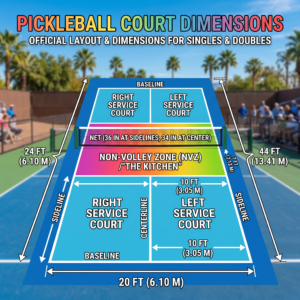
 Pickleball is catching on like wildfire, but knowing the court dimensions is key to playing by the rules everyone can agree on. A standard pickleball court is 20 feet wide and 44 feet long. It basically looks like a smaller tennis court. This size accounts for all the sideline rallies and smashing that make pickleball fast and fun.
The origins of these dimensions are quite rich. Adapted from badminton courts, these measurements plus the non-volley zone, aka the ‘kitchen’—a 7-foot area on either side of the net where players aren’t allowed to smash the ball—are part of what keeps the game unique and fair.
Sticking to these standard dimensions is super important because it ensures a consistent playing field whether you’re just trying it out at a local community center or going pro. It helps maintain that sense of fairness and predictability that every sport needs.
The standard dimensions might differ a tad between indoor and outdoor courts, mostly to accommodate surroundings and weather conditions. Indoors, you might deal with tighter spaces or lower ceilings. Outdoors could present challenges like wind. But the key is to keep as close as possible to that standard 20 by 44 feet for the best gameplay experience.
The Impact of Court Dimensions on Gameplay Dynamics
Pickleball isn’t just about paddles and balls—it’s also about the court itself. Those dimensions matter and totally change how the game is played. A standard court size of 20 by 44 feet means every shot, every volley, and every move is tuned to perfection.
Playing on this size lets players move quickly and forces you to strategize, especially with doubles games. In doubles, each team member has to cover about half the court width, meaning teamwork and communication are a must. Trying to cover less or more than that can throw off the whole rhythm.
Sizing up your shots when you’ve got those fixed dimensions can help speed up or slow down the game, depending on your approach. A quick low shot right over the net may keep your opponent on their toes, while a lob to the back could give you some breathing room.
Pro players and everyday enthusiasts alike might share stories of how a few inches can make or break a game. The court dimensions are about precision and allowing for all levels to find challenge and fun in the mix.
These specific dimensions also make the game accessible to a wider audience, including older players and those with varying abilities. The smaller court minimizes the distance you need to cover, which means more inclusive play and healthier competition across the board.
Building or Renting a Pickleball Court: What You Need to Know
Thinking about setting up your very own pickleball court? Whether you’re going full DIY or just scouting spots to rent, there’s a bunch of stuff to consider.
First off, the location is key. You need a space that can accommodate the court’s 20 by 44-foot dimensions along with some extra room for players to move around freely. An ideal setup would be somewhere flat and stable. If it’s outdoors, make sure it’s got good drainage so rain doesn’t ruin your game.
If constructing your own court, you’ll need decent materials like durable court surface tiles or reliable paint for marking the boundaries. Opt for materials that can withstand your local climate, especially if it’s going to face harsh weather conditions. Don’t forget the net system, which should sit right at 36 inches high at the sidelines and 34 inches at the center to meet standard regulations.
For those renting, check if the existing court aligns with the standard dimensions. Sometimes, places tweak the size to fit specific areas, which could throw your game off if you’re not prepared. Double-check that all equipment, including nets and sidelines, is regulation height and clearly marked.
Getting the green light might also mean diving into local guidelines or regulations. Always ensure you’ve got the necessary permits or permissions, especially if you’re altering existing spaces or building new ones.
Keeping your court well-maintained means checking dimensions stay accurate. With time and constant play, lines get smudged, and nets sag, messing with gameplay. Regular checks and maintenance ensure every match is fair and fun, keeping the spirit of pickleball alive wherever you play.