Why Round Robin Is Taking Over Pickleball
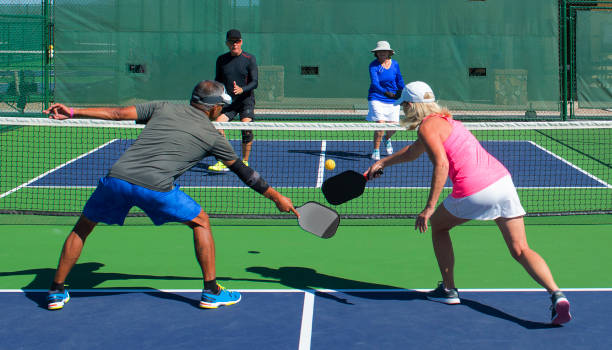
Walk onto almost any local pickleball court in 2026 and you’ll see a familiar pattern: players gathering in groups, rotating courts, switching partners, and playing a steady stream of games without long waits or confusing brackets. That’s the round robin format in action—and it’s quickly becoming the default way communities organize casual and competitive pickleball play.
Round robin formats are taking over local pickleball events because they solve problems that traditional formats create. They reduce waiting time, keep games fair, help new players feel included, and make it easier for organizers to run events without needing complex software or tournament experience. For many players, especially at the recreational and club level, round robin has become the most enjoyable way to play.
What Is a Round Robin Format in Pickleball?
In a round robin format, every player or team plays against every other player or team in their group. Instead of single-elimination brackets where one loss can knock you out, round robin guarantees multiple games for everyone.
Round robin events can be structured in several ways:
- Individual round robin – each player rotates partners and opponents.
- Doubles team round robin – fixed teams play every other team in the group.
- Mixed skill round robin – players of different levels are grouped to balance play.
- Timed round robin – games are played to a time limit instead of a fixed score.
Regardless of the variation, the core idea is simple: everyone gets to play, and everyone gets multiple chances to compete.
Why Players Love Round Robin Formats
Round robin has exploded in popularity because it matches what most local players want from pickleball: fun, fairness, variety, and social connection. Here are the main reasons players prefer round robin over traditional tournament formats.
1. More Playing, Less Waiting
In single-elimination or ladder formats, players often spend more time waiting than playing. One early loss can mean sitting on the sidelines for the rest of the event. Round robin fixes that by guaranteeing multiple games for everyone.
With round robin:
- Players know they’ll get a set number of games.
- Courts stay active with constant rotation.
- There’s less frustration about “wasted” time.
For busy adults and seniors who carve out limited time for pickleball, round robin makes every minute count.
2. Fairer Competition Across Skill Levels
Local pickleball groups often include a mix of beginners, intermediates, and advanced players. Traditional formats can create lopsided matches or early blowouts. Round robin allows organizers to group players by skill level or mix them intentionally to create balanced play.
Common approaches include:
- Grouping players by self-rated skill (e.g., 3.0, 3.5, 4.0).
- Creating “social” and “competitive” round robins.
- Rotating partners so weaker players get experience with stronger ones.
This structure helps everyone feel challenged without being overwhelmed.
3. More Social Interaction
Pickleball is known for its social atmosphere, and round robin formats amplify that. Because players rotate partners and opponents, they meet more people, play with different styles, and build relationships across the group.
Round robin encourages:
- Friendly conversation between games.
- Supportive coaching and tips from more experienced players.
- A sense of community instead of “us vs. them” competition.
For many local clubs, round robin has become the backbone of their social culture.
4. Less Pressure, More Fun
In elimination formats, every game can feel like a do-or-die moment. That pressure can be exciting for some, but stressful for many recreational players. Round robin spreads out the stakes across multiple games.
Players know:
- One bad game won’t ruin their entire event.
- They’ll have chances to recover and improve.
- They can focus on learning and enjoyment, not just winning.
This makes round robin especially appealing for newer players and seniors who value fun and fitness over high-stakes competition.
Why Organizers Prefer Round Robin
It’s not just players who love round robin—organizers do too. Running local pickleball events can be stressful, and round robin simplifies the process.
1. Easier to Plan and Run
Round robin formats are straightforward to set up. Organizers can create a simple schedule on paper or in a spreadsheet, assign courts, and let the rotation happen.
Key benefits:
-
- No complex bracket management.
- Predictable event length based on number of players and games.
For volunteer-run clubs and community centers, this simplicity is a major advantage.
2. Better Use of Court Time
Round robin keeps courts busy. Because players rotate quickly and everyone has a defined schedule, there are fewer gaps and idle courts.
Organizers can:
- Maximize court usage during peak hours.
- Accommodate more players in a single session.
- Run multiple groups simultaneously.
This efficiency is especially important in areas where court space is limited.
3. Clear Expectations for Players
With round robin, players know what they’re signing up for: a certain number of games, a set time window, and a rotation pattern. This clarity reduces confusion and complaints.
Organizers can communicate:
- How many games each player will get.
- How long the event will last.
- How partners and opponents will be assigned.
When expectations are clear, events run smoother and players leave happier.
Common Round Robin Formats Used in Local Pickleball
As round robin has grown, several standard formats have emerged. Here are the most popular ones you’ll see at local courts.
1. Fixed Partner Round Robin
In this format, doubles teams stay together and play every other team in their group. It’s ideal for couples, regular partners, or competitive pairs who want to test themselves against a variety of opponents.
2. Rotating Partner Round Robin
Each round, players get a new partner and new opponents. This format is highly social and great for open play sessions where the goal is variety and fun.
3. Skill-Based Round Robin
Players are grouped by skill level, and each group runs its own round robin. This keeps matches competitive and fair, especially in clubs with a wide range of abilities.
4. Timed Round Robin
Instead of playing to a fixed score, games are played for a set amount of time (e.g., 10 or 12 minutes). When time is up, scores are recorded and players rotate. This format keeps events on schedule and works well when court time is limited.
How Round Robin Handles Scoring and Winners
Even though round robin is often used for social play, it can still produce clear winners for more competitive events. Common scoring methods include:
- Total wins – the player or team with the most wins.
- Point differential – points scored minus points allowed.
- Head-to-head results – used to break ties.
Organizers can decide whether to emphasize competition or keep things purely social. Many local groups use round robin for “friendly competition” where scores are tracked but the focus remains on enjoyment.
Why Round Robin Fits the Spirit of Pickleball
Pickleball has always been about more than just winning. It’s about connection, movement, laughter, and community. Round robin formats align perfectly with that spirit.
They encourage:
- Inclusive play for all ages and skill levels.
- Frequent partner changes and new friendships.
- Shared court time instead of long waits.
- Opportunities to learn from different styles and strategies.
As the sport continues to grow, formats that support these values naturally rise to the top—and round robin is leading the way.
Will Round Robin Replace Traditional Tournaments?
Round robin is unlikely to replace all traditional formats, especially at higher levels of competition where brackets and elimination play are deeply rooted. However, at the local and recreational level, round robin is already becoming the default choice.
We’re likely to see:
- More clubs using round robin for weekly events and open play.
- Hybrid formats that combine round robin group stages with bracket finals.
- Round robin used as a “warm-up” or seeding tool before main tournaments.
In other words, round robin isn’t just a trend—it’s a structural shift in how everyday pickleball is played.
Final Thoughts: Why Round Robin Is Here to Stay
Round robin formats are taking over local pickleball events because they deliver what players and organizers need most: fairness, fun, efficiency, and connection. They guarantee more games, reduce waiting, simplify planning, and create a welcoming environment for everyone from brand-new beginners to seasoned competitors.
As pickleball continues to grow, communities will keep looking for ways to manage crowds, balance skill levels, and maintain the social heart of the game. Round robin does all of that—and that’s why it’s not just popular right now, but likely to remain a core format for years to come.
If your local group hasn’t tried round robin yet, it might be time. Once players experience the steady flow of games, the variety of partners, and the sense of shared participation, it’s easy to see why round robin is taking over the courts.