If you’re getting into pickleball, you’re probably hearing a lot about training aids. I remember my first time picking up a paddle. I wanted something more than just hitting a ball against the wall. That’s where training aids stepped in and totally boosted my progress. With so many gadgets and tools out there, figuring out which ones are worth it can get confusing. Here I’m digging into the best pickleball training aids that can really help take your skills up a notch, whether you’re brand new or looking to fine-tune your game.
Why Use Pickleball Training Aids?
Pickleball isn’t just about rallying back and forth. At its core, it’s a skill based sport, and every little tweak to your technique pays off during matches. Training aids are popular because they can simulate real game moments, help with consistency, and focus on specific weaknesses. In my own adventure, using a ball machine made drilling serve returns way more efficient than just asking a buddy to rally for hours.
The pickleball training industry has been catching up to the explosive growth of the sport, too. According to the SFIA’s 2023 report, pickleball participation grew over 85% from 2020 to 2023 in the U.S. alone. That means more innovation and better choices on the table. With so many new aids available, it’s easier for players to build solid skills at any level without a pro coach on standby.
What Kinds of Training Aids Are Out There?
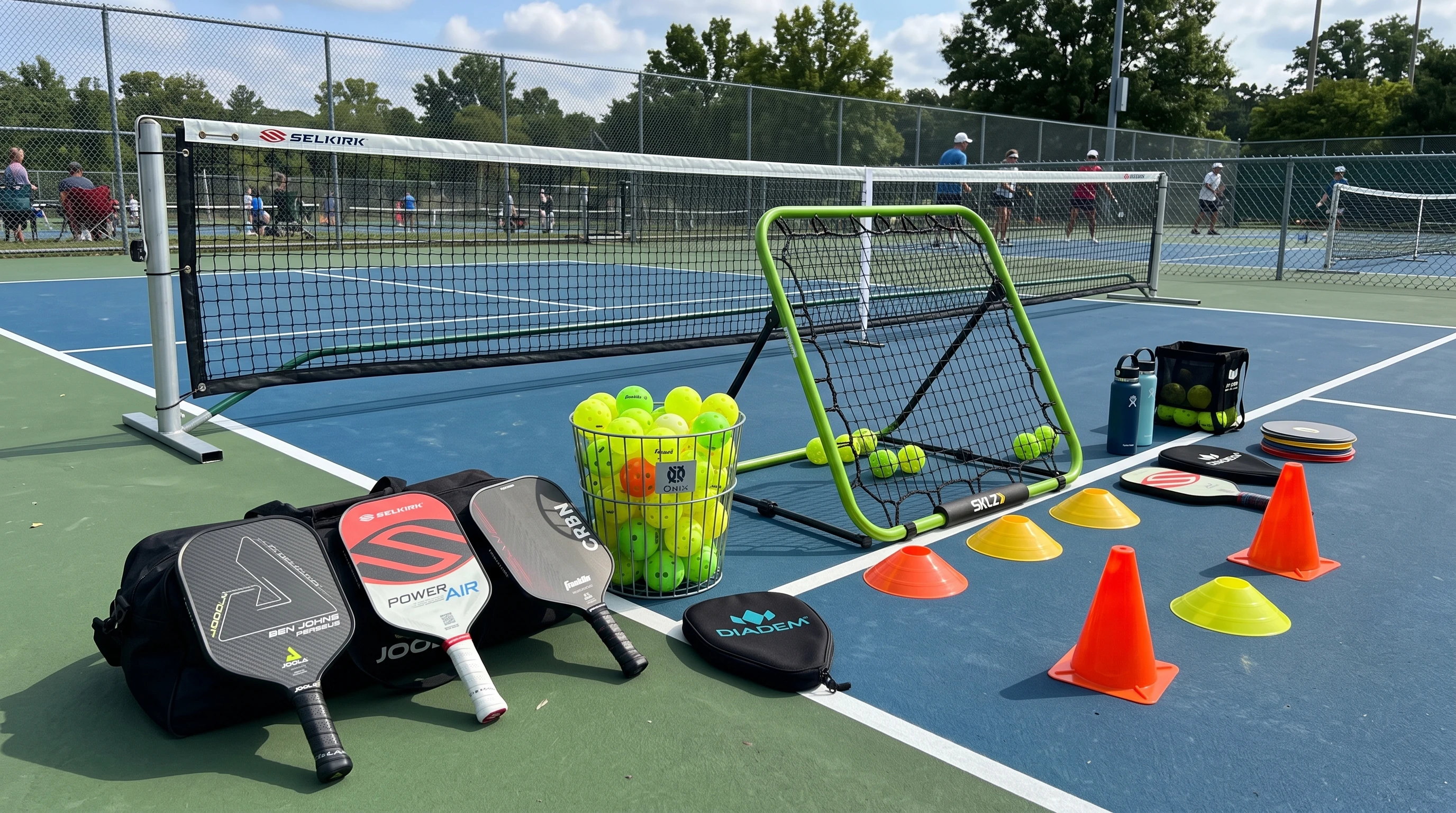
It’s pretty easy to get lost in the gadget jungle, so breaking down the main categories of training aids makes everything clearer:
- Ball Machines: Automated feeders that pitch balls at different speeds, spins, and heights for solo practice.
- Target Nets & Rebounders: Nets with marked targets or bouncy surfaces for working on aim, shots, or volley consistency.
- Weighted Paddles & Grip Trainers: Gear that helps you work on swing mechanics, wrist strength, or grip control.
- Footwork & Agility Tools: Ladders, cones, and mats for improving your speed, lateral movement, and balance on court.
- Video & Sensor Tech: High tech options like swing sensors and video coaches that break down your technique.
Some other aids include resistance bands for shoulder strengthening or special practice balls made for outdoor or indoor play. Training apps and online courses also serve as valuable virtual aids for drill ideas and skill tracking. Whether you practice in your driveway or at a club, there’s almost always a tool to boost your experience.
Best Pickleball Training Aids: My Top Picks
I’ve spent time trying out different tools and hearing feedback from local players. Here’s a rundown of the pickleball training aids I’ve found super useful for different skill levels and focuses.
Ball Machines
Ball machines are my go to for solo sessions. They’re kind of like having a rally partner that never gets tired. Popular models for pickleball (like the Tutor Pickleball Machine or Spinshot Player) let you set spin, direction, feed rate, and even randomize shots. Here’s what stands out:
- Consistent Practice: You can work on forehand drives, volleys, or dinks without waiting for a partner or coach.
- Progress Tracking: Keeping your shots consistent over dozens of feeds is a solid way to measure improvement.
- Realistic Game Play: More advanced machines serve up different speeds and heights, mimicking opponents you’ll face in matches.
While ball machines aren’t cheap, there are portable options for casual play if you don’t want to lug a full size unit to the park. For those serious about their game, it’s an investment that pays off quickly. Some ball machines are even battery operated, allowing for hours of practice at remote courts without needing an outlet. Go here to get a great ball machine.
Target Nets & Rebounders
Practicing aim is something almost everyone forgets until a match is on the line. Target nets come with designated scoring zones that help your precision, especially for serving and return drills. Some nets even stand in the kitchen to let you practice dinking without needing a playing partner.
Rebounders are another no fuss way to get those repetitive volley drills in and work on control. These are nets with a springy surface; the ball bounces back, simulating a real game return. I use mine for quick volley practice when I want to squeeze in a five minute drill at home.
- Target Consistency: Aim for corners or specific zones to improve your shot placement.
- Solo Play: Get more reps than you could during typical rallies with a partner.
- Portable Design: Most are easy to store and set up, making them great for driveway routines or limited court time.
Weighted Paddles & Grip Trainers
If you’ve ever felt your wrist getting tired near the end of a match, you’re not alone. Weighted paddles are a fun way to add resistance training to routine drills. I rotate in a weighted paddle during warmups to help strengthen my grip and improve paddle speed back with my regular paddle.
Grip trainers are also helpful for beginners who tend to lose proper paddle grip. They keep your hand placement the same and help develop muscle memory. Some are rubber addons you slide over the handle, while others are adjustable sleeves or collars.
- Wrist & Arm Strength: Build muscle and avoid injuries by gradually adding resistance.
- Proper Grip Maintenance: Great for breaking habits like “pancaking” the grip or choking up during play.
Footwork & Agility Tools
Movement is everything in pickleball. I like to keep an agility ladder or some cones in my gear bag. Simple footwork ladders help with coordination, balance, and keeping your stance low between shots. Cones can mark movement drills or help you practice precise positioning along the kitchen line.
- Improved Court Coverage: Quick footwork lets you get in position ahead of the ball, especially during fast volley exchanges.
- Prevents Common Injuries: Warming up legs with these tools can help stave off muscle pulls or rolled ankles.
Tech Tools: Sensors and Video Aids
Technology has found its way onto the pickleball court. Motion sensors (like Zepp or Swing Vision) attach to your paddle or wrist to gather swing data; things like swing speed, follow through, and angle at contact. Paired with video aids, you can break down each shot visually and get feedback on your mechanics.
- Immediate Feedback: Sensor apps usually provide suggestions for improvement right after your drill.
- Progress Over Time: Match stats and swing data help you spot patterns to fix or strengths to double down on.
Video aids, from phone tripods to smart cameras, offer a new level of personal coaching when you can’t be on court with a pro. Regular review of your recorded footage helps spot trends, mistakes, and even breakthroughs, making your self driven training much more productive.
How to Pick the Right Pickleball Training Aid
Choosing a training aid isn’t just about grabbing the coolest gadget you see online. Here are things I keep in mind before buying:
- Your Skill Level: New players benefit most from basic aids (like nets or ladders), while experienced players might want high tech sensors or ball machines.
- Budget: There are quality options ranging from $20 grip trainers up to $1,000+ automated machines. Decide how often you’ll use the aid before splurging.
- Portability: If your main practice spot is the local rec center or park, look for something easy to transport and set up alone.
- Focus Area: If you struggle most with serves, lean toward serving targets. Weak footwork? Grab a ladder. The more specific the tool, the better it helps fix the issue.
Make a short list of your greatest weaknesses and peek at the most popular aids targeted for each. This helps you avoid gear you won’t actually use, saving both time and money. Reviews from other players at your skill level can offer reliable insights into whether a training tool is as useful as it sounds.
What to Know Before Investing in Pickleball Training Aids
Not every training tool is going to be a miracle fix, and a few common issues can pop up if you’re not careful. Here are some things I’ve learned that are worth thinking about:
- Durability: Some less expensive aids break down quickly, especially when used outdoors. Check product reviews and look for weather resistant gear if you play outside year round.
- Usability: Complicated machines or tools can turn training into a hassle. I make sure whatever I buy is easy to set up, take down, and pack away after a session.
- Realistic Reps: The best training aids imitate game situations, not just mechanical movements. I always test whether my new purchase actually helps with skills that show up in real matches.
- Space Requirements: Large rebounders or ball machines need enough room. Double check your space at home or the court before making a purchase.
Durability
Gear that’s going to get tossed around or stay outside needs to hold up. The rebound net I picked up online a few years ago ended up warping after the first rainy season. Since then, I’ve always checked for warranties or looked for rustproof and UV resistant options if the equipment will be outside.
Usability
The most helpful training aids are ones you actually want to practice with, not something that spends all its time in the garage because it feels like a chore. Portable kits, foldable targets, or simple cones are my suggestion for players who value quick sessions or move between multiple courts. Setting up your aids quickly means no wasted court time and more efficient practice.
Realistic Reps
I like aids that simulate rallies, unpredictable ball speed, or actual dink exchanges. They keep training fun and match relevant. This is especially true for intermediate players who need to respond to different shot types on the fly and make fast decisions just like in a real game.
Space Requirements
Not every driveway or backyard will fit a 12foot rebound net or allow space for a ball machine. Measuring your home court (or practice space) ahead of time avoids returns and disappointment.
Nothing is more frustrating than gear that isn’t quite what you expected or doesn’t fit your real practice needs. A bit of planning and research saves time and money in the long run.
Extra Tips for Getting the Most Out of Pickleball Training Aids
Even the best training aid won’t help if it collects dust. I’ve picked up a few habits to squeeze more value out of the gear I use:
- Set Specific Goals: Don’t just hit for half an hour; decide to land 30 serves in a row in the target zone or finish 50 clean dinks without error.
- Vary Practice Drills: Mix up routines to target different skills each week; think serves on Monday, dinks on Wednesday, agility drills on Friday.
- Track Progress: Mobile apps, a spreadsheet, or even pencil and paper can help measure improvement week by week.
- Record Video: Even if it’s just your phone on a tripod, seeing yourself play reveals habits and mistakes you never noticed before.
Switching up practice styles and tracking my progress kept me motivated to use my gear and actively improve, not just go through the motions. Sharing practice videos with a coach or trusted club member can add accountability and spark new drill ideas as well.
Common Questions About Pickleball Training Aids
Lots of folks at my local club ask about the same things when it comes to practice gear. Here are a few questions I hear all the time:
Question: Do I need fancy equipment to improve my pickleball game?
Answer: Not at all. Some players get great results using cones, chalk lines, or even a wall. Training aids are handy if you want a bit more variety or need to work on specific weak spots.
Question: Are ball machines worth the money?
Answer: Ball machines are a bigger investment, but if you want regular, consistent practice (especially when you don’t have partners), they’re pretty handy. Many clubs also rent ball machines, which can help you try one out before you buy.
Question: Will using training aids translate to better performance in matches?
Answer: Training aids can help with things like shot consistency and reflexes, but real match play is where all those reps pay off. Using aids regularly along with real games is the best combination.
Question: Can I use training aids if I don’t have a dedicated pickleball court?
Answer: Definitely. Many training aids like portable targets, cones, or even lightweight rebounders can be set up in your driveway, garage, or local park. Being creative with your space means you can work on your skills anywhere.
How Training Aids Fit Into Real Pickleball Play
Most players are after the same goal: feeling comfortable and confident when matches get competitive. Training aids won’t magically make you a champion, but they can speed up skillbuilding or make practice time more productive. For example:
- Target Practice: Practicing serves with a target net makes a difference when you’re up against a tough receiver.
- Solo Play: Ball machines and rebounders let you drill shots even if no one else is available to rally with you.
- Conditioning: Good footwork doesn’t just help you reach drop shots; it can also reduce fatigue during multigame tournaments.
One local tournament player I know credits her weekly sessions with a ball machine and agility ladder for climbing the ranks at her club. More focused practice, better muscle memory, and new drills with simple gear kept her on track to hit her goals faster than folks practicing only through matches. Training aids also offer a structured way for players recovering from injuries to regain skills and confidence at their own pace.
Quick Buying Guide for Pickleball Training Aids
Here’s a summary checklist I use anytime someone asks how to choose the right training aid:
- Identify a Skill to Improve: Serve accuracy, volleys, dinks, movement, etc.
- Match Aid to Skill: Example: Serve targets for aim, agility ladders for movement.
- Decide on Solo or Partner Drills: Ball machines and rebounders are best for solo work. Cones and agility tools work for both group and solo.
- Read Some Reviews: I always search forums or online reviews to see if the product holds up and delivers real results.
- Set a Budget: There are options for almost any price range, so decide what you’re comfortable spending beforehand.
Practice quality trumps quantity. Even basic gear can support real improvement if you use it intentionally and stay consistent. Ask other players at your local club for recommendations and share experiences to find the best options for your practice goals.
Ready to Become a Pickleball Pro?
Pickleball is more approachable than ever thanks to all the new gear hitting the scene. Training aids, big or small, make your time on the court productive and even more fun. Whether you’re looking for better serves, faster feet, or just want to enjoy a solid solo drill, there’s a training aid out there ready to give your game a lift.
Grab a tool that makes sense for your needs and get out there; your next win could just be a practice session away!