The short verdict: who the Hyperion CFS is for and who it isn’t
This JOOLA Ben Johns Hyperion CFS review comes down to one question: do you want a paddle that rewards a brushing, spin-first swing, and can you live with the trade-offs that come with a textured carbon face and a long handle?
The paddle suits these players:
- Two-handed backhand players who want room for both hands.
- Players who already generate spin and want more of it on serves, drops, and drives.
- Tennis converts used to swinging up and through the ball.
- Competitive club players who want an aggressive paddle in a name-brand line.
It is a weaker fit for these players:
- Control-first dinkers who value a soft, quiet, predictable touch above everything else.
- One-handed players who prefer a short handle for quick hand speed at the kitchen.
- Players with a sore elbow or shoulder who have not tried a stiff carbon paddle before.
- Beginners still working out basic contact, who will not use the spin the surface offers.
The rest of this review explains why each group lands where it does, so you can match the paddle to your own game.
What you get: carbon surface, elongated handle, and the Ben Johns connection
The Hyperion CFS is part of JOOLA’s Ben Johns signature line. Johns is one of the most recognizable names in professional pickleball, and the paddle carries his branding. A signature name tells you who the marketing is aimed at, but it does not tell you whether the paddle fits your swing. A pro’s paddle is built around a pro’s contact quality, and most club players do not hit the sweet spot with the same consistency.
Two design features matter most for how the paddle plays. The first is the face: a carbon surface with a gritty, textured finish, which is where the “CFS” in the name comes from. The texture grips the ball for a fraction of a second longer than a smooth face would, and that extra grip is what produces spin. The second is the elongated handle, which is longer than a standard handle and gives you more room to hold the paddle with one hand or two.
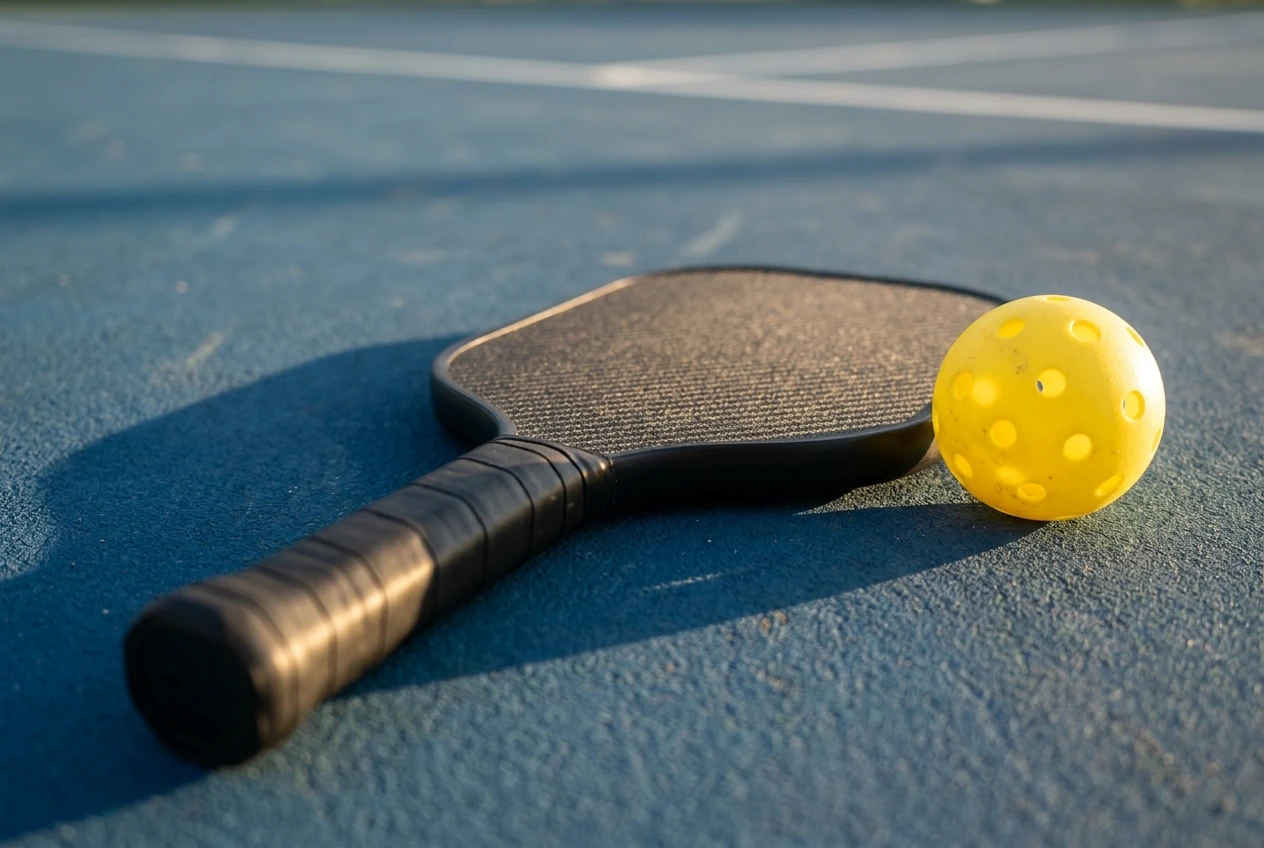
Details such as core thickness, weight, and exact dimensions vary by version, so read the specification section of the Amazon listing for the specific model you are considering. Weight in particular changes how the paddle feels in a long dink rally, and it is worth comparing against the paddle you use now.
Spin: how the high-grit surface behaves on serves, third-shot drops, and topspin drives
Spin is the main reason to look at this paddle, and the surface is built for it. A rough face catches the ball when you brush up the back of it, so more of your swing speed turns into rotation instead of forward pace. The result is a ball that curves and drops more sharply than the same swing would produce with a smooth paddle.
Serves. A spin serve with a textured face dips and kicks differently from a flat one, and it can be harder for a returner to handle cleanly. Brush the ball with a quick upward motion and the face does the rest. A slow, pushing serve gets very little from the grit.

Third-shot drops. This is where spin earns its place for many players. Topspin on a drop pulls the ball down earlier, so you can hit it with a slightly higher arc and still have it land in the kitchen. A higher arc gives you more margin over the net. The catch is that the drop depends on your swing path. If you swing flat or stab at the ball, you will not get the dip, and the shot will sit up for an attacker.
Topspin drives. Aggressive players can hit hard and still keep the ball in, because the spin brings it down. A driven ball with heavy topspin also bounces up and forward off the court, which makes it awkward to block back. Tennis converts and anyone with a natural low-to-high swing will feel at home here.
The trade-off is that a spin-heavy surface rewards a particular swing and asks for good timing. Off-center hits can behave less predictably than they would on a smoother face, because the grip exaggerates small errors in contact angle. Like any textured surface, the grit can also lose some of its bite as it wears and when dirt builds up on the face, so a quick wipe after play is worth the habit. If you buy this paddle mostly for spin, expect the effect to be strongest when the paddle is new and clean.
Power: what the paddle gives you on drives and put-aways, and what you have to supply
A carbon face with a stiff feel returns energy well, and the Hyperion CFS is aimed at players who want to put the ball away. On a drive or a put-away overhead, the paddle does not feel like it is soaking up your swing. If you hit with a full, committed stroke, the ball leaves the face quickly.
The longer handle also helps. With a longer lever, you can generate more swing speed on a two-handed or extended grip, and that shows up on overheads and backhand drives.
What the paddle does not supply is free power on a short swing. Spin-focused paddles turn a lot of your effort into rotation, so the ball can feel less “poppy” off the face than you might expect from a raw-power paddle. You provide the speed, and the paddle shapes it into a heavy, dipping ball. For players who like to hit flat and fast, that can feel like a trade, because some of the energy that would have gone into pace goes into spin.
Put-aways are a good example. A spin put-away stays low and skids after the bounce, which makes it difficult to return, but you need to hit through the ball rather than just placing it. Players who tend to swing late may find the ball sails or goes into the net more often with this surface until their timing adjusts.
Control and feel: dinking, resets, and blocking at the kitchen
At the kitchen, the Hyperion CFS asks more of you than a softer, more forgiving paddle would. A textured carbon face tends to feel crisp and lively. That liveliness helps when you want to attack a ball or roll a dink with topspin. It can work against you when you only want to absorb pace and drop the ball softly.
Dinking. Spin on dinks lets you keep the ball low and make it bounce awkwardly for the opponent. The grit helps you add a little slice or topspin without a big swing. If your dinking style is soft and patient, with a flat face and a gentle push, you will get less out of the surface and may find the feel a bit sharper than you like.
Resets. Resets are about killing pace, and a stiffer, livelier face makes that harder. You need a relaxed grip and soft hands to let the ball die in the kitchen. Players who tense up under pressure may send resets long.
Blocking. Blocks off hard drives work fine, and the stiffness helps you redirect pace. Because blocking relies on a stable face, a long handle can make the paddle feel slightly slower to turn when you are in a fast hands battle. That is a small cost, but one-handed players will notice it first.
If control and touch are your top priority, try to hit with this paddle before you commit, or compare it against a softer-feeling option on the same budget.
The elongated handle: reach and two-handed backhand benefits, and the downsides for one-handed players
The handle is the feature that most clearly divides buyers.

Benefits for two-handed backhand players. A longer handle gives both hands space to sit comfortably. Your top hand can guide the swing while the bottom hand drives it, and neither has to crowd the other. For players who hit two-handed backhands, especially those coming from tennis, this is a real reason to choose an elongated paddle. The extra length also adds a little reach, which helps on wide balls and on defensive stretches.
Benefits for reach and leverage. Even for one-handed players, a longer handle lets you choke up or slide down depending on the shot. Sliding down gives you leverage on drives and overheads. Sliding up gives you a shorter, quicker paddle for exchanges at the net.
Downsides for one-handed players. If you grip near the base and never use the extra length, the paddle can feel less nimble than a standard-handle model, especially in fast hand battles. The balance may feel more toward the head, which raises swing weight and can tire your forearm over long sessions. Wide, extended handles also change how your hand sits, so the grip may feel awkward until you adjust.
A note on arm comfort. Stiff carbon paddles with extra swing weight can feel harsher on a sensitive elbow or shoulder than softer, more flexible ones. If you have a history of arm discomfort, check the weight and core thickness on the listing, think about how a stiffer paddle might feel, and consider speaking with a clinician or coach if you have a persistent issue. A thicker core generally absorbs more vibration, but confirm the actual specification for the version you are buying.
Pros and cons at a glance
Pros
- The gritty carbon surface adds spin to serves, drops, and drives.
- The elongated handle gives two-handed backhand players room for both hands.
- Extra handle length adds reach and leverage on overheads and put-aways.
- A stiff, responsive face suits aggressive, committed swings.
- A recognized signature line with a large player following.
Cons
- The spin benefit depends on a brushing swing path, so flat hitters gain less.
- Off-center hits can behave less predictably on a textured face.
- The surface may lose some bite over time and with dirt buildup.
- The crisp feel makes soft dinks and resets harder for touch-first players.
- The longer handle can feel slower in fast one-handed hand battles.
- Stiff carbon construction may be uncomfortable for arm-sensitive players.
Who should skip it, and what to look at instead
Skip the Hyperion CFS if any of these describes you:
- You rely on soft hands and patient dinking. Look at paddles known for a softer, more muted feel, often with a thicker core, which give you more control on resets and slow exchanges.
- You play one-handed and like a quick, short paddle. A standard-length handle will feel more maneuverable at the kitchen.
- You have arm pain or are recovering from an injury. Prioritize comfort and vibration damping over spin, and talk to a professional if it persists.
- You are new to the game. Spin helps most when your contact is consistent. A forgiving, more affordable paddle will teach you more at this stage, and you can move to a spin-focused model later.
- You hit flat and fast and do not brush the ball. A smoother, power-oriented face will suit that style better.
When you compare alternatives, line up the same four things on each listing: surface texture, handle length, weight, and core thickness. Those four details explain most of the differences in how paddles feel.
Frequently asked questions about the Hyperion CFS Is the JOOLA Ben Johns Hyperion CFS good for beginners? It can work, but it is not the easiest first paddle. The gritty carbon face rewards a brushing swing, and a beginner still working on basic contact will not get much from the spin. A softer, more forgiving paddle is usually a better start. Is the Hyperion CFS USAPA approved? The listing describes it as USAPA approved. Paddle approval lists change, so confirm the current status on the official USAPA list before you rely on it for tournament play. Does the elongated handle suit one-handed players? Not always. The extra handle length helps two-handed backhand players and gives more reach, but one-handed players who like quick hand speed at the kitchen may find it slower to maneuver. Is it a good paddle for dinking? It is playable, but it is built more for spin and aggression than a soft, quiet touch. Control-first dinkers should try one before committing. Before you buy on Amazon: approval status, grip size, fakes, and returns to check
A few checks before you click buy will save you trouble.
- Approval status. Confirm that the paddle is approved for sanctioned play by the governing body for your events. If you play tournaments or leagues, check the current approved paddle list and make sure the exact model is on it. Surface texture is regulated, so approval matters for this kind of paddle in particular.
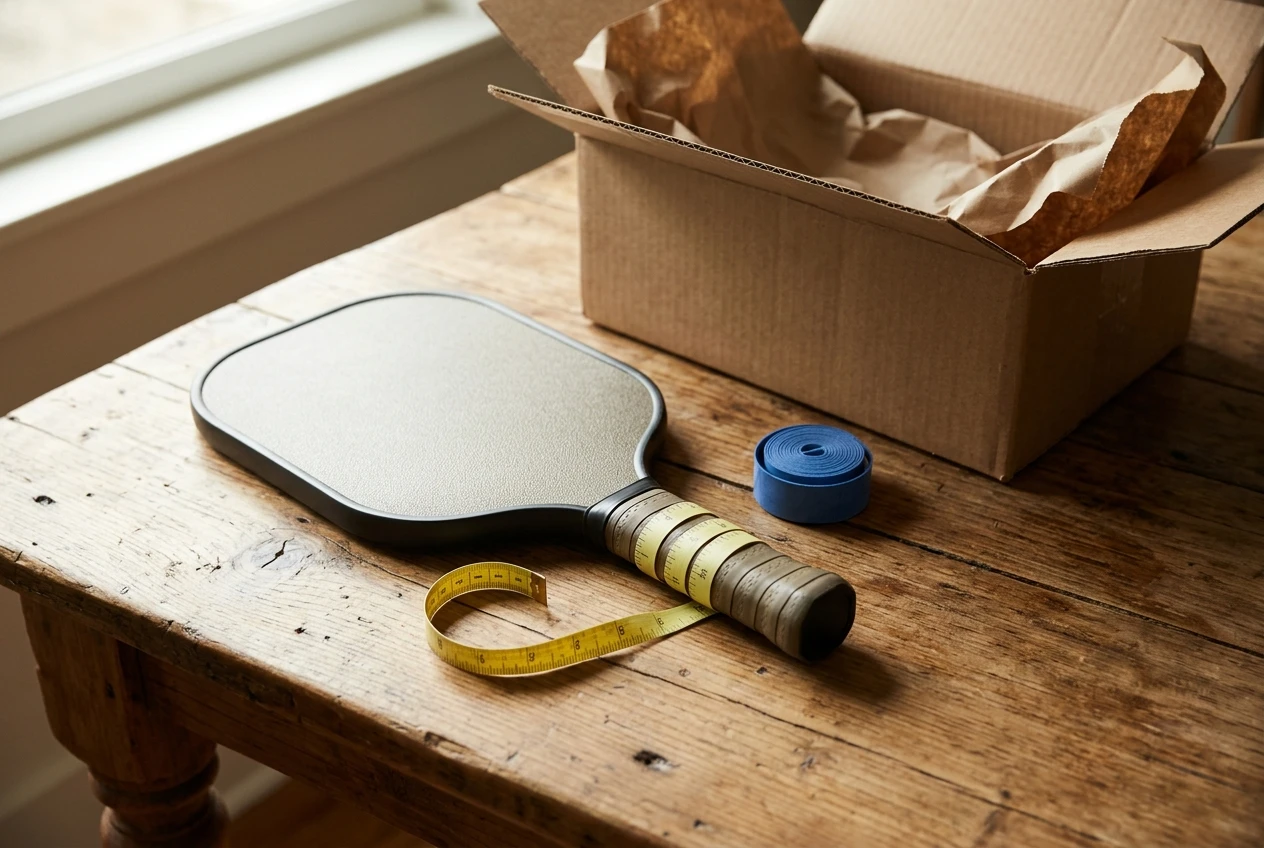
- Grip size. Check which grip circumference the listing offers and compare it to what you use now. A grip that is too small encourages squeezing and can strain the forearm, and one that is too large slows your wrist. If you are between sizes, a slightly smaller grip can be built up with overgrip, but you cannot easily shrink a large one.
- Fakes. Counterfeit paddles are a known problem in online marketplaces. Buy from the official JOOLA storefront or from a seller the listing clearly identifies as authorized, and look at the seller name, not just the product page. A price that is far below every other listing is a warning sign.
- Returns. Read the return policy on the listing before ordering. Check the window, whether used paddles are accepted, and who pays for return shipping. Paddles with textured faces are hard to judge until you have hit with them, so a clear return option matters.
- Reviews. Read recent customer reviews with your own game in mind. Reviews from players with a similar swing, handle preference, and arm history tell you more than a high average rating.
Prices on Amazon change, so check the current price and customer reviews for the JOOLA Ben Johns Hyperion CFS on Amazon before you decide.